
Before the Russian invasion, Ukraine was often seen as a peripheral place in Europe, associated with the former Soviet Union, corruption, the invasion of Crimea, and the Maidan Revolution. However, I have actively chosen to work with developers from Ukraine for several years and have visited the country multiple times, especially in Lviv. When speaking with people there, particularly younger generations, there is a clear desire to distance themselves from Putin and be part of Europe. Of course, this sentiment may vary depending on where in Ukraine one is located, but I have yet to meet someone who wants closer ties with Russia after speaking with people from across the country.
The current situation
Unfortunately, the past 18 months have been filled with sad stories of refugees, death, and rock et attacks on civilians. While there is sympathy, it is not the story that Ukrainians want us to associate with their country. At the launch of our Ukrainian product, the embassy sent a message that was repeated: “Support Ukrainian business.” The question now is how we can help Ukrainians feel more connected to Europe and become part of us.
The learnings from neuro marketing
By examining successful marketing campaigns and knowledge within “Neuro Marketing,” we may find clues. For example, when Pepsi conducted blind taste tests comparing their product to Coca-Cola, Pepsi was often preferred despite Coca-Cola’s higher market knowledge and overall rating. This demonstrates how products and their country of origin can influence consumer behaviour. Applying this knowledge to supporting Ukrainian businesses could help foster a stronger, long-term relationship between Europe and Ukraine.
Coca-Cola, naturally, felt a great disappointment when its competitor achieved the highest score. In response, they invested significant time and resources to create a new test that incorporated people’s emotions. It turns out that our brains play a role in influencing our perception of taste. When Coca-Cola conducted an open test where participants were aware of the beverages they were tasting and were subsequently asked about their preference between Coca-Cola and Pepsi, unsurprisingly, Coca-Cola emerged as the winner. This outcome was
influenced by the participants’ preexisting positive impressions of Coca-Cola. Over the years, Coca-Cola has successfully shaped its impact on customers through effective marketing campaigns that revolve around the concept of shared enjoyment. This taps into one of the fundamental human needs – the desire to be part of a group that experiences positive moments together. Coca-Cola is well aware of this and has deliberately positioned its product at the top of our emotional hierarchy through positive influence. This strategy is similar to the one employed by Apple, which has successfully cultivated a passionate fanbase to the extent that any suggestion of their iPhone not being the best phone ever can trigger strong reactions from their loyal supporters.
The human brain forms strong positive associations with brands like Coca-Cola and Apple, shaping our perceptions and emotions towards their products. Just as Coca-Cola has influenced our preference for the best cola in the market, high-quality products from Ukraine can also foster positive connections and conscious engagement with the country. Before the war, Ukraine may not have held the same place in our collective consciousness as countries like the Czech Republic (known for beer), Croatia (a popular holiday destination), or Italy (renowned for design and food). However, through increased awareness of Ukraine’s history and culture, as well as the empathy generated by the current situation and past injustices during its time in the Soviet Union, the country and its people have garnered significant sympathy. The brain, a remarkably intricate organ, can be influenced both consciously and unconsciously in various ways.
The brain and propaganda
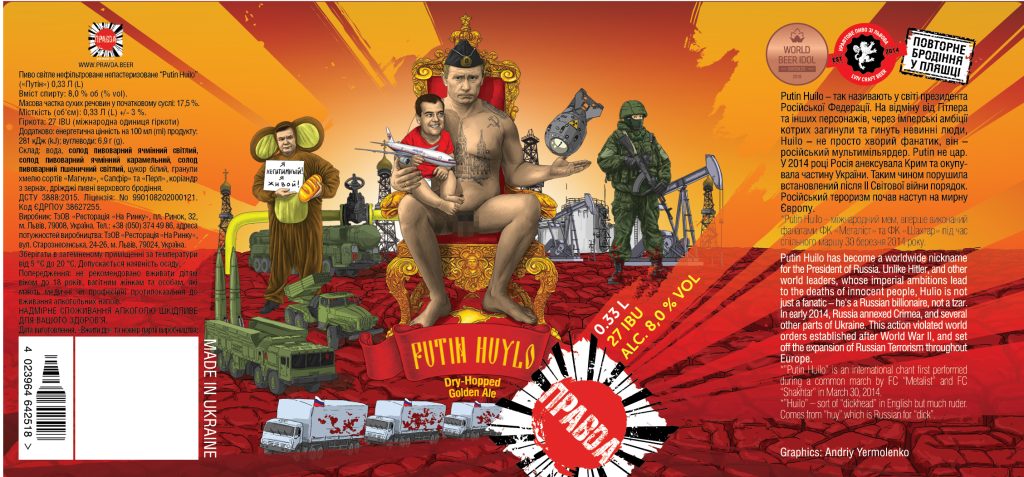
Russian propaganda is well-known, taking advantage of people’s inclination to believe repeated stories, even if they are absurd. This has created favourable conditions for Russia to shape its own version of “truth” without much opposition within its population. Surprisingly, they have also managed to influence many in the West who, despite being aware of the situation, still choose to believe in Russia’s narrative. Even prominent figures like Noam Chomsky, Tucker Carlson, Roger Waters, and even The Guardian have succumbed to the Russian propaganda machine, printing stories directly from its sources after the invasion in 2014.
The brain’s connections and neural pathways are strengthened in areas responsible for processing narratives. With repeated exposure, the brain becomes convinced that the presented pattern is the correct story. Additionally, by engaging in the brain’s primary activity of pattern recognition, individuals can better understand the current situation they are in. Those who offer easily comprehensible stories tend to attract a significant number of followers. Despite the improbability for the majority, many people are captivated by these narratives. Through frequent repetition, the aforementioned process is reinforced, albeit with a negative impact.
The importance of “Made in Ukraine”
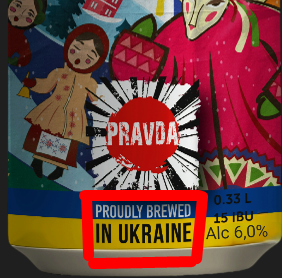
How can we utilize this knowledge to counteract Russia’s actions and create a positive perception of Ukraine in Norway and the wider Western world? The most effective approach is to establish a strong and sustainable relationship with Ukraine through positive influence. This entails building connections, forging alliances in Ukraine and the West, adopting new means of communication, and fostering collaboration. Daily influence can be achieved through high-quality consumer products, preferably originating from Ukraine. While we have long consumed Ukrainian products in Norway, they often lack explicit branding, such as “Made in Ukraine,” on items like grains or computer codes. However, we are now beginning to see Ukrainian products that people can consciously engage with, which can generate long-term awareness and influence. Ultimately, our goal is to establish the same level of affinity for Ukrainian products as consumers have for renowned brands like Coca-Cola. On a broader scale, it is imperative for Norway and the rest of Europe to develop an effective strategy to support Ukraine’s European integration process, as Ukraine aspires to join the EU. While we have already witnessed the arrival of some Ukrainian products, particularly in Vinmonopolet stores, bars, and restaurants—such as beer from Pravda Brewery in Lviv, wine from Shabo in Odesa, and Nemidoff vodka from Nemyriv—there is still ample room for more. Whether it is Roshen chocolate or Gurman jam, the specific product matters less than its presence and visibility. Similar to how Croatian beaches have shaped our positive perception of Croatia and football, pubs, and humour have influenced our view of Britain, this new wave of Ukrainian products can help reshape our perception of Ukraine, moving away from its Soviet past and positioning it as a progressive and vibrant nation on par with other Eastern Bloc countries that have successfully integrated into Europe. The door is open; we simply need to welcome Ukraine in, sit down with our new friends, and enjoy a drink and some chocolate from their remarkable country.